


Hey there! As a supplier of Leather Shoe Insole, I often get asked if leather shoe insoles have a good grip on the shoe interior. Well, let's dive right into it and find out!
First off, let's talk about why grip matters. When an insole has a good grip inside the shoe, it stays in place. You don't want your insole sliding around every time you take a step. That can be super annoying and even affect your walking or running gait. A well - gripped insole provides consistent support and comfort throughout the day.
Leather, as a material, has some natural properties that can contribute to its grip. Leather has a certain amount of friction. The texture of leather is not completely smooth. It has tiny irregularities on its surface, which can create friction against the inner lining of the shoe. This friction helps the insole to stay put. For example, if you have a leather insole in a leather - lined shoe, the two leather surfaces interact in a way that can enhance the grip. The natural oils in leather also play a role. These oils can make the leather slightly tacky, adding to the overall grip.
However, the grip of a leather shoe insole isn't always perfect. It depends on a few factors. The type of leather used makes a big difference. High - quality, full - grain leather usually has a better grip compared to lower - grade leathers. Full - grain leather retains more of its natural texture and oils, which are beneficial for grip. On the other hand, split - grain or bonded leather may have a smoother surface and fewer natural oils, resulting in less grip.
The condition of the shoe interior also matters. If the inside of the shoe is very smooth, like in some synthetic - lined shoes, the leather insole might not grip as well. The smooth surface reduces the friction between the insole and the shoe. Additionally, if the shoe interior is dirty or has been treated with a slippery coating, it can negatively impact the grip of the leather insole.
Now, let's look at some of the different types of leather shoe insoles we offer and how their grip might vary.
Our Latex Leather Insole is a unique option. The latex layer in this insole adds an extra element to the grip. Latex is a sticky material, and when combined with leather, it can significantly improve the insole's ability to stay in place inside the shoe. The latex adheres to the shoe interior, creating a strong bond. This type of insole is great for people who are on their feet a lot and need an insole that won't shift around.
Then there's our Sheepskin Shoe Insole. Sheepskin has a soft and fuzzy texture. While it might not seem like it would have a great grip at first glance, the natural fibers of sheepskin can actually interlock with the shoe lining. This interlocking creates a form of grip. The sheepskin also has a bit of elasticity, which allows it to conform to the shape of the shoe and stay in position.
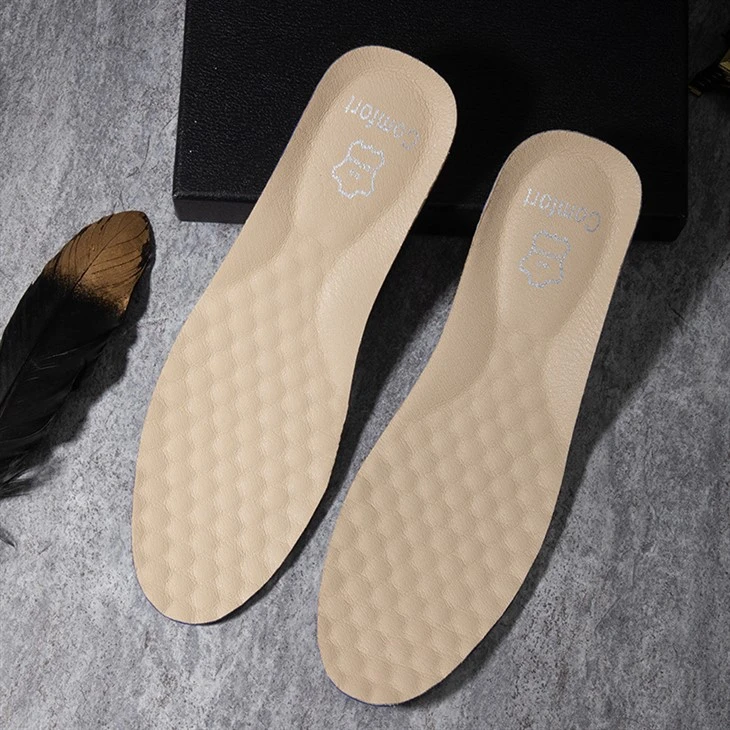

To improve the grip of leather shoe insoles, there are a few things you can do. One simple trick is to roughen the bottom of the insole slightly. You can use fine - grit sandpaper to gently scuff the surface. This creates more friction and helps the insole grip better. Another option is to use a grip - enhancing spray. There are sprays available on the market that are designed to increase the tackiness of surfaces. Applying a small amount of this spray to the bottom of the leather insole can make a noticeable difference in its grip.
In some cases, you might need to consider the fit of the insole. If the insole is too small for the shoe, it's more likely to move around. Make sure you choose an insole that is the right size for your shoes. Most of our leather shoe insoles come in a range of sizes to ensure a proper fit.
From a scientific perspective, the grip of a leather shoe insole can be analyzed using the principles of friction. Friction is the force that resists the relative motion of two surfaces in contact. The coefficient of friction between the leather insole and the shoe interior determines how well the insole will grip. This coefficient can be affected by factors such as the material properties of the leather and the shoe lining, the surface roughness, and the presence of any contaminants or lubricants.
In conclusion, leather shoe insoles generally have a decent grip on the shoe interior, but it's not a one - size - fits - all situation. The type of leather, the condition of the shoe, and other factors can all influence the grip. At our company, we're constantly working to improve the grip and performance of our leather shoe insoles. Whether you choose our Leather Shoe Insole, Latex Leather Insole, or Sheepskin Shoe Insole, we're confident that you'll find a product that meets your needs.
If you're interested in purchasing our leather shoe insoles in bulk for your business or just want to learn more about our products, don't hesitate to reach out. We're here to answer any questions you might have and discuss your specific requirements. Contact us for a friendly chat and let's start a great business relationship!
References
- "The Science of Friction" - A general textbook on friction principles
- "Leather: Properties and Applications" - A book on the characteristics of different types of leather


